Understanding the different types of tennis strings is the first step to improving your game. Your racket is a car — your strings are the engine. Two players with the same racket but different strings will hit completely different shots. This guide breaks down every tennis string type — what it does, who it suits, and what it costs in India — so you can pick the right one for your game.
📋 What's Inside This Guide
- Quick Comparison Table
- Polyester Strings — The Spin Machine
- Multifilament Strings — The Comfort King
- Monofilament (Synthetic Gut) — The Budget All-Rounder
- Hybrid Strings — Best of Both Worlds
- India-Specific Recommendations
- Which String Type Should You Choose?
- String Gauge Guide
- Frequently Asked Questions
There are three main types of tennis strings available in India: polyester tennis strings, multifilament tennis strings, and monofilament tennis strings (also called synthetic gut). A fourth type — Natural Gut — exists but is rare and expensive, so most players choose from these three or combine them into a Hybrid setup. Each material is engineered differently — affecting power, spin, comfort, durability, and control in distinct ways.
At Sports Galaxy, tennis strings start from just ₹249 for a 12m set, with popular options like Babolat RPM Blast and Solinco Hyper-G averaging ₹699–₹999. Whether you are looking for tennis strings for beginners or advanced-level spin strings, this guide on types of tennis strings covers everything — including tennis string price comparisons, climate advice, and the best tennis strings in India for every budget and playing style.
Quick Comparison: Tennis String Types at a Glance
Here is a side-by-side comparison showing how the major string types perform across key criteria. Natural Gut is included for reference, though it is rarely available in India.
| Feature | Polyester | Multifilament | Natural Gut | Synthetic Gut | Hybrid |
|---|---|---|---|---|---|
| Power | ⭐⭐ | ⭐⭐⭐⭐ | ⭐⭐⭐⭐⭐ Best | ⭐⭐⭐ | ⭐⭐⭐⭐ |
| Spin | ⭐⭐⭐⭐⭐ Best | ⭐⭐ | ⭐⭐ | ⭐⭐⭐ | ⭐⭐⭐⭐ |
| Control | ⭐⭐⭐⭐⭐ Best | ⭐⭐⭐ | ⭐⭐⭐ | ⭐⭐⭐ | ⭐⭐⭐⭐ |
| Comfort | ⭐⭐ | ⭐⭐⭐⭐ | ⭐⭐⭐⭐⭐ Best | ⭐⭐⭐ | ⭐⭐⭐⭐ |
| Durability | ⭐⭐⭐⭐⭐ Best | ⭐⭐ | ⭐⭐ | ⭐⭐⭐⭐ | ⭐⭐⭐⭐ |
| Tension Hold | ⭐⭐ | ⭐⭐⭐ | ⭐⭐⭐⭐⭐ Best | ⭐⭐⭐⭐ | ⭐⭐⭐ |
| Price (India, 12m) | ₹499–₹1,500 | ₹699–₹2,000 | ₹2,500–₹5,000+ | ₹249–₹500 | ₹800–₹2,500 |
| Best For | Advanced, spin players | Comfort seekers, tennis elbow | Pros, arm injury recovery | Beginners, budget | Intermediate–Advanced |
| Construction | Single filament (mono) | 100s of microfibers woven | Cow intestine fibers | Nylon core + wraps | 2 different types combined |
No single string type is "the best." The right string depends on your playing level, style, physical condition, and budget. A ₹400 synthetic gut can outperform a ₹2,000 polyester — if it matches your game better.
1. Polyester (Co-Poly) Strings — The Spin Machine 🔥
Polyester tennis strings are constructed from a single strand of polyester material — which is why they are also called monofilament polyester strings. Co-polyester (co-poly) strings add additives like elastomers, olefins, or plasticisers to the base polyester to modify stiffness, comfort, or spin potential. Among all types of tennis strings, polyester is the most popular choice on the professional tour.
Polyester revolutionized modern tennis. When Brazilian player Gustavo Kuerten first used Luxilon polyester strings to win the 1997 French Open, it changed how the game is played. Today, players like Carlos Alcaraz, Jannik Sinner, and Iga Swiatek use polyester to generate massive topspin — sometimes exceeding 4,000 RPM on their forehands. If you are looking for the best tennis strings for spin, polyester is the undisputed choice.
How Polyester Generates Spin
The key mechanism is called "snapback". When the ball makes contact, polyester strings slide out of position briefly. Because of their low friction and stiff composition, they snap back to their original position very quickly. This rapid snapback imparts extra rotation on the ball — far more than any other string material can produce.
Shaped polyester strings (octagonal, pentagonal, square-profile) take this further by biting into the ball surface for even more spin. Textured and rough-coated versions provide additional grip.
✅ Pros
- Best spin potential of any string type
- Most durable — ideal for frequent string breakers
- Excellent control for big swings
- Wide range of shaped/textured options available
- Affordable compared to natural gut
❌ Cons
- Stiff — can cause arm discomfort or tennis elbow
- Loses tension fast (up to 25% in first 24 hours)
- Low power output — you must generate your own
- "Goes dead" quickly — playability drops after 15–20 hrs
- Not recommended for beginners or juniors
In temperatures above 35°C, polyester strings lose tension even faster than normal. During Indian summers, you may need to restring more frequently (every 10–15 hours of play) or string 2–3 lbs tighter than usual to compensate.
Popular Polyester Strings Available at Sports Galaxy
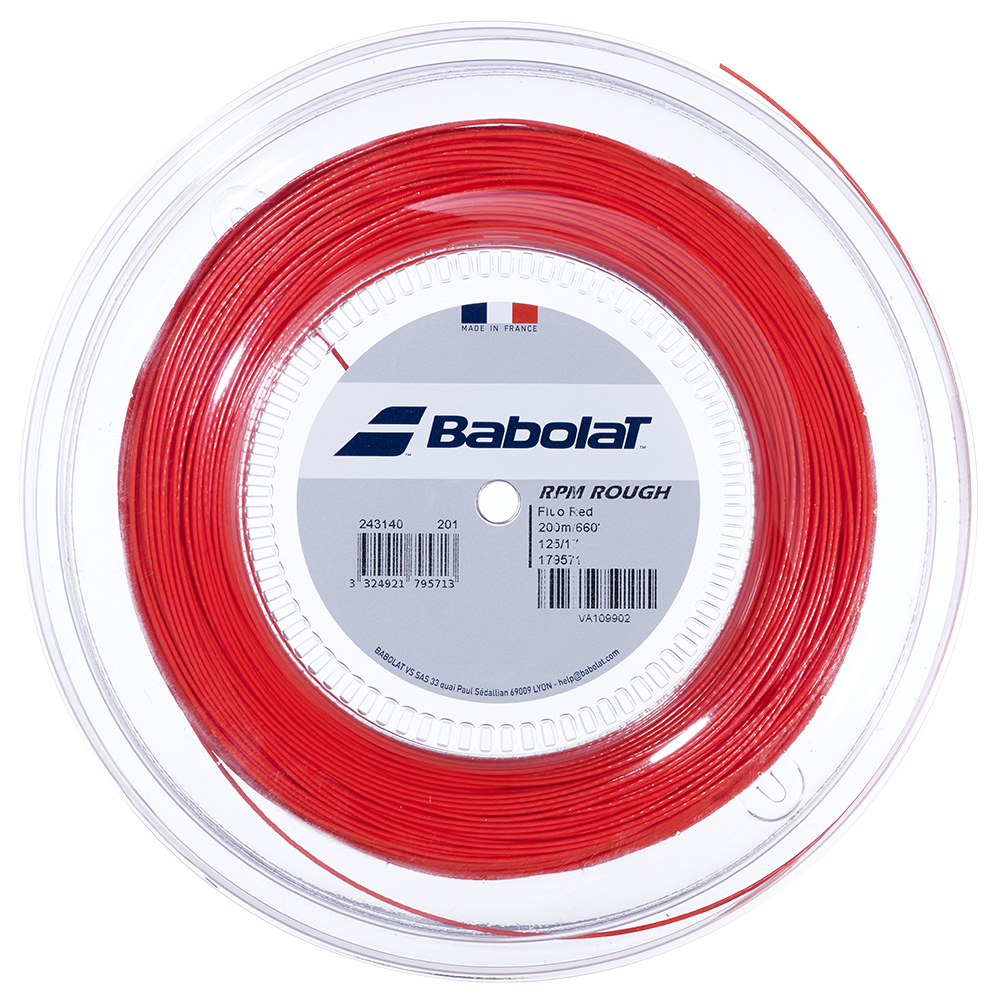
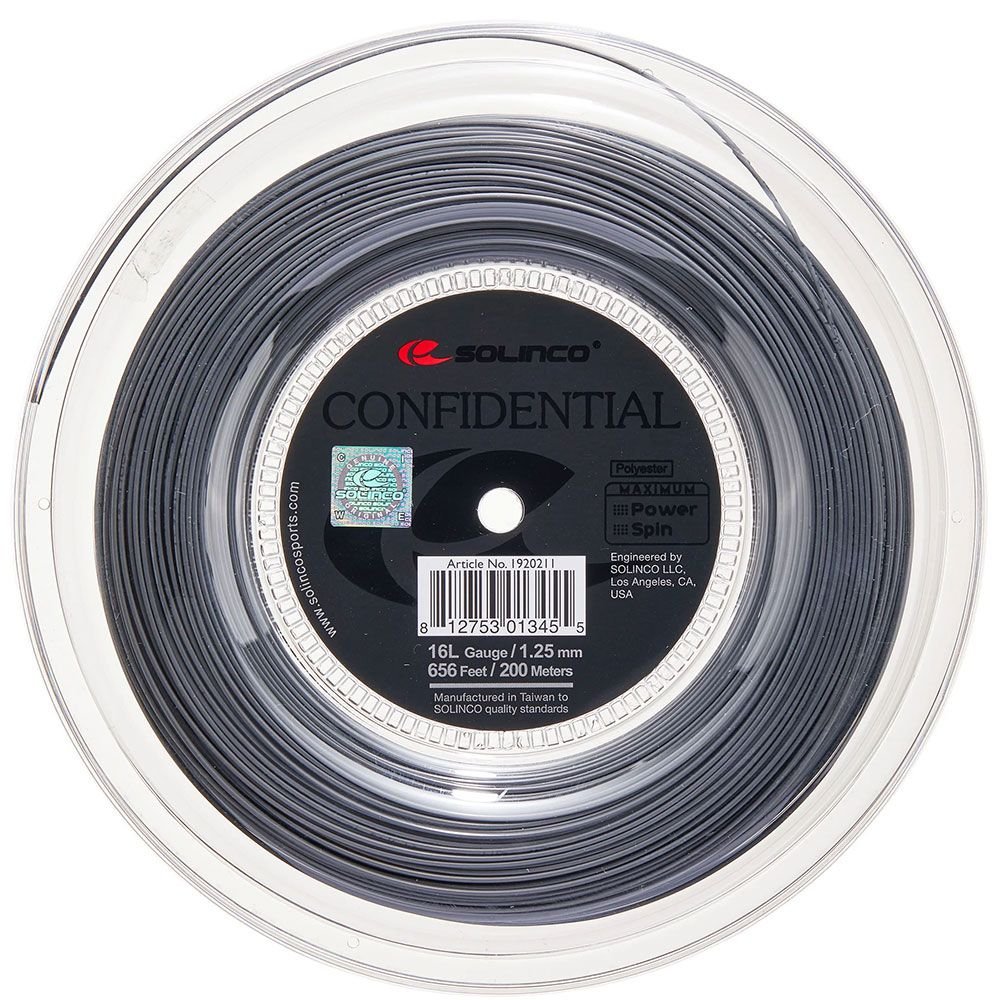
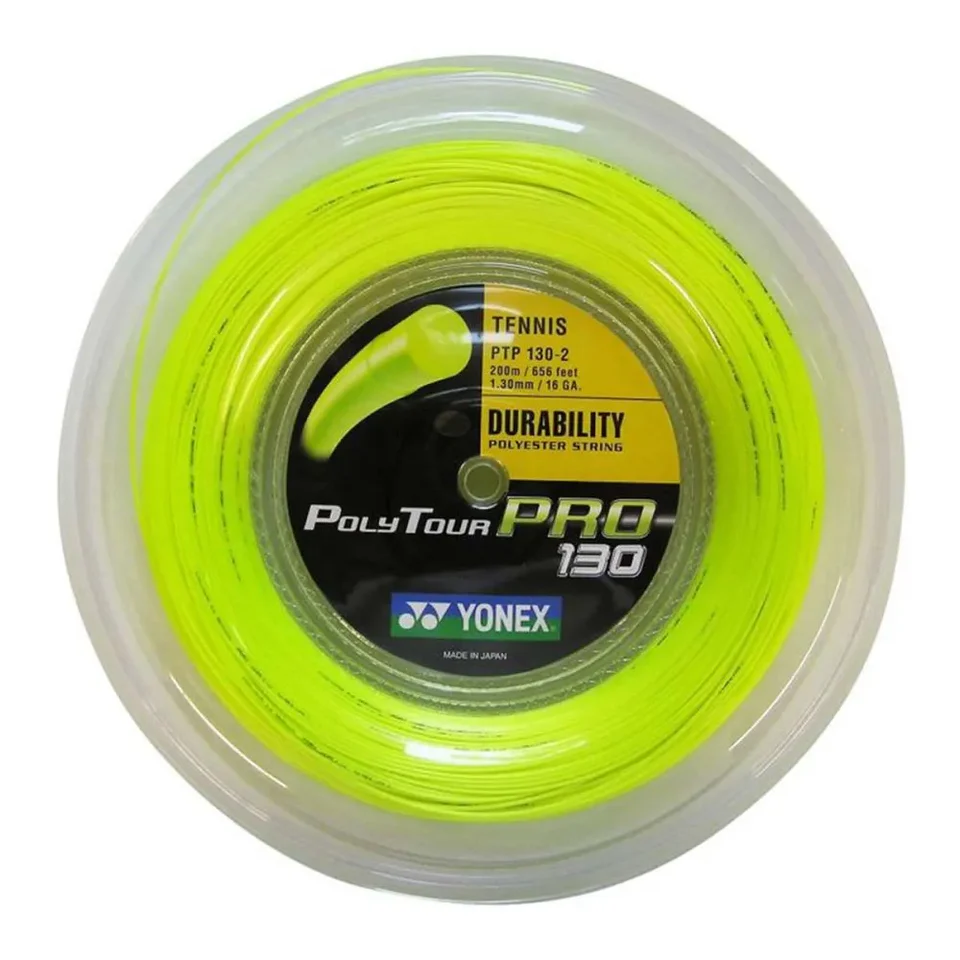
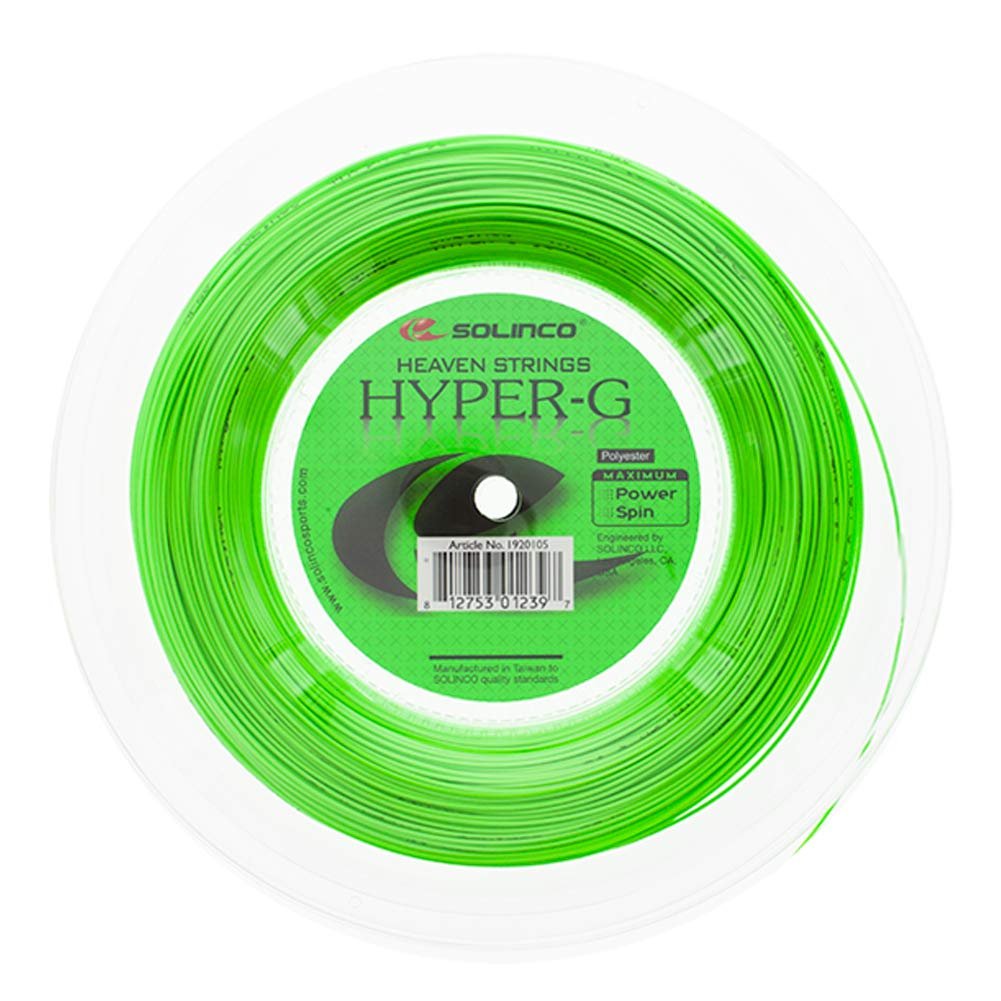
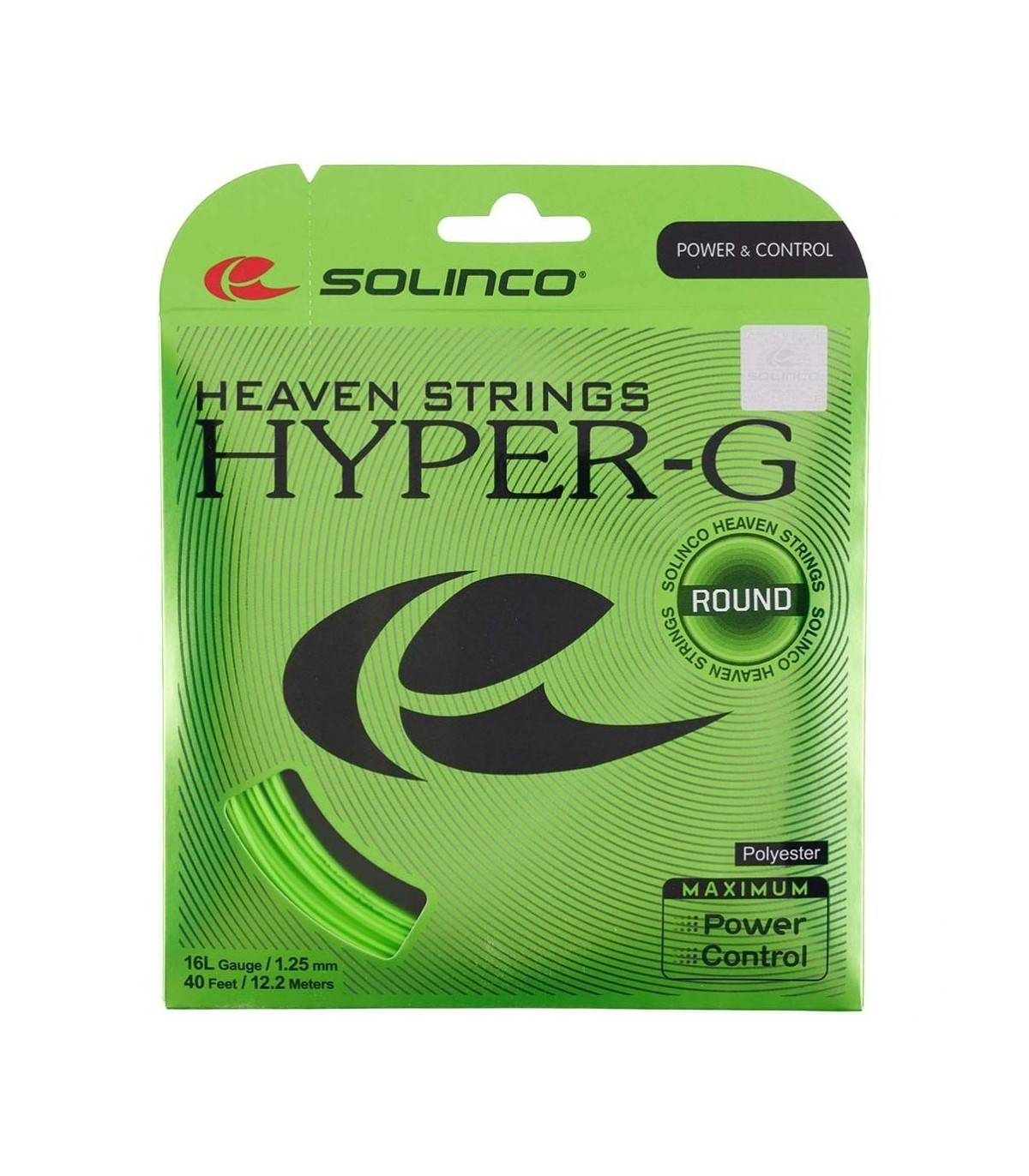
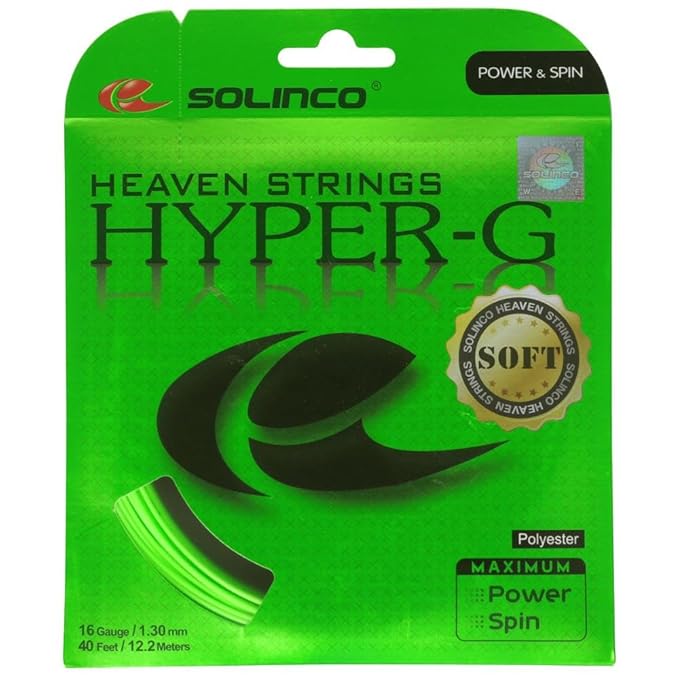
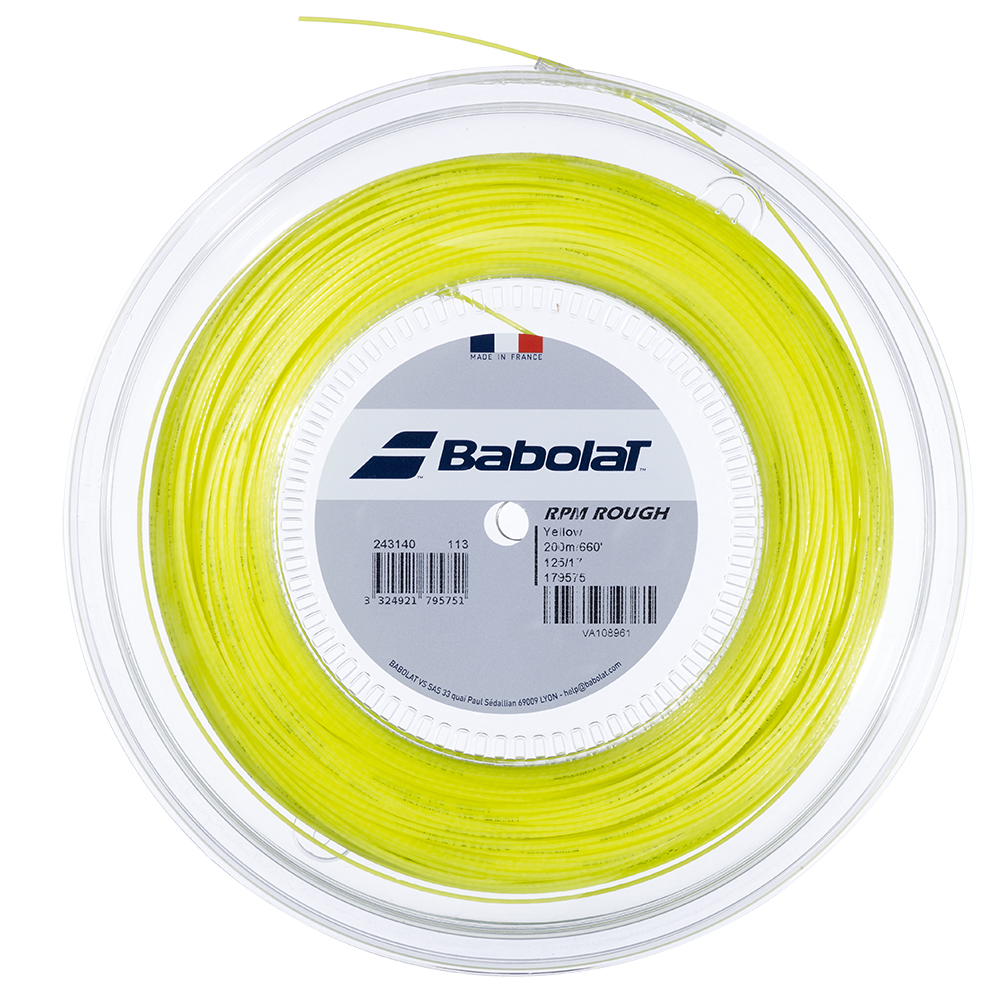
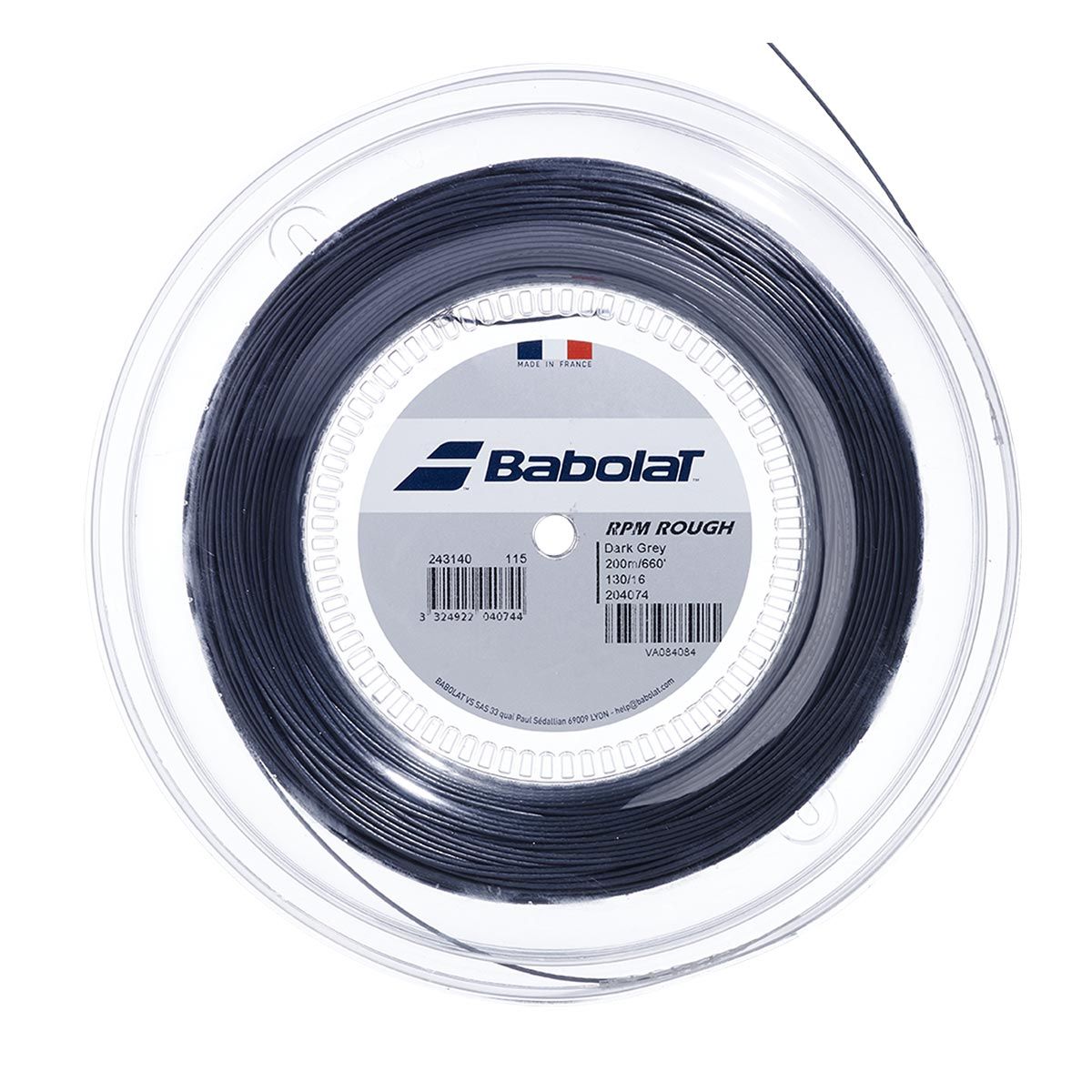
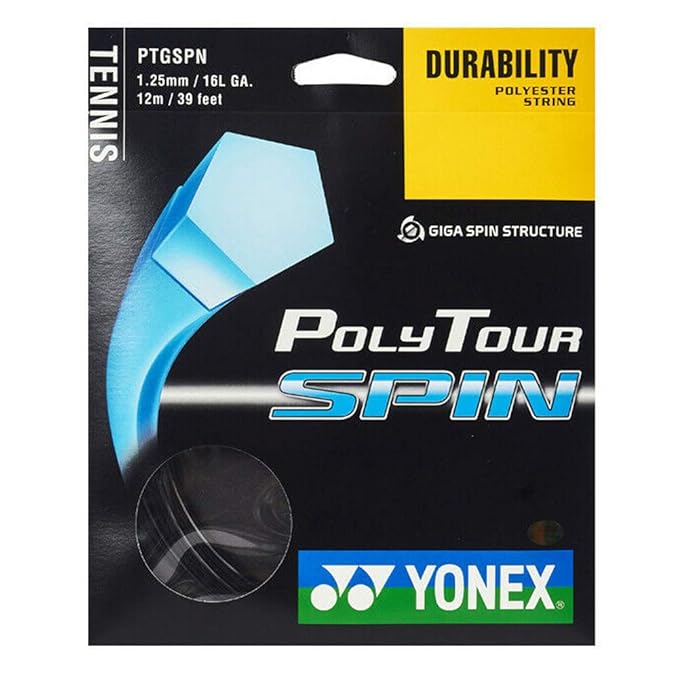
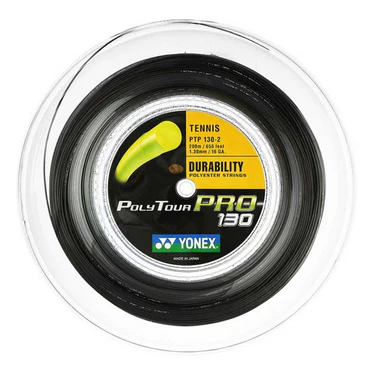
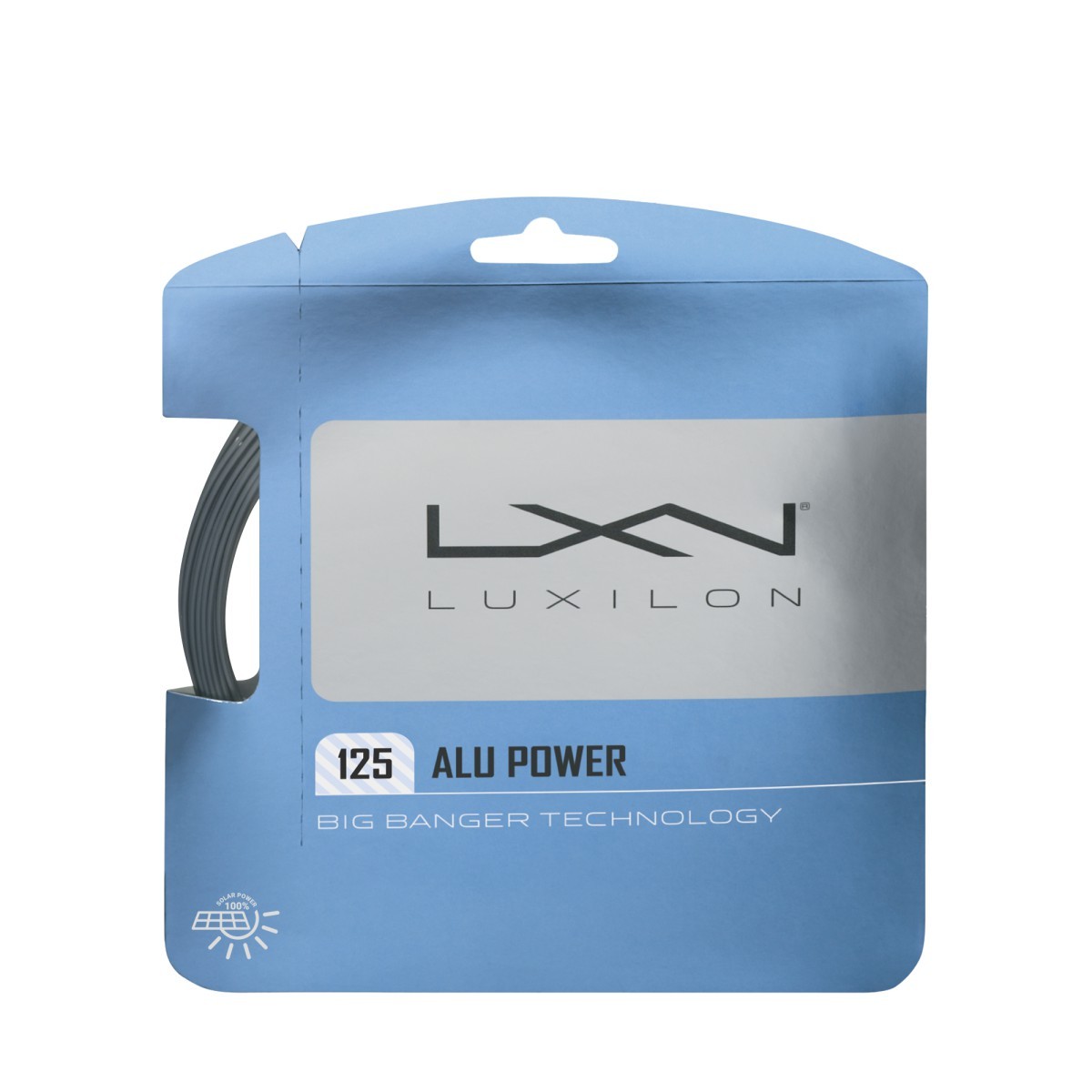
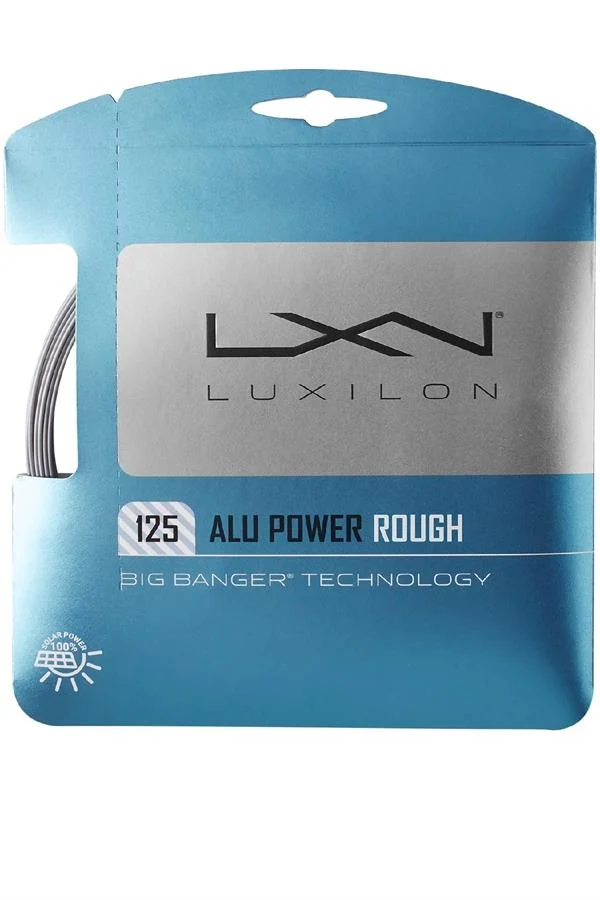
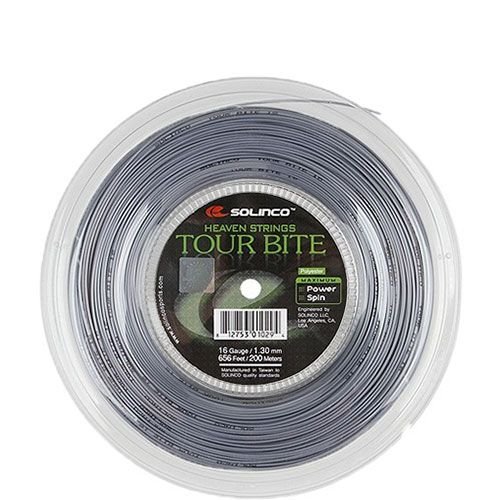
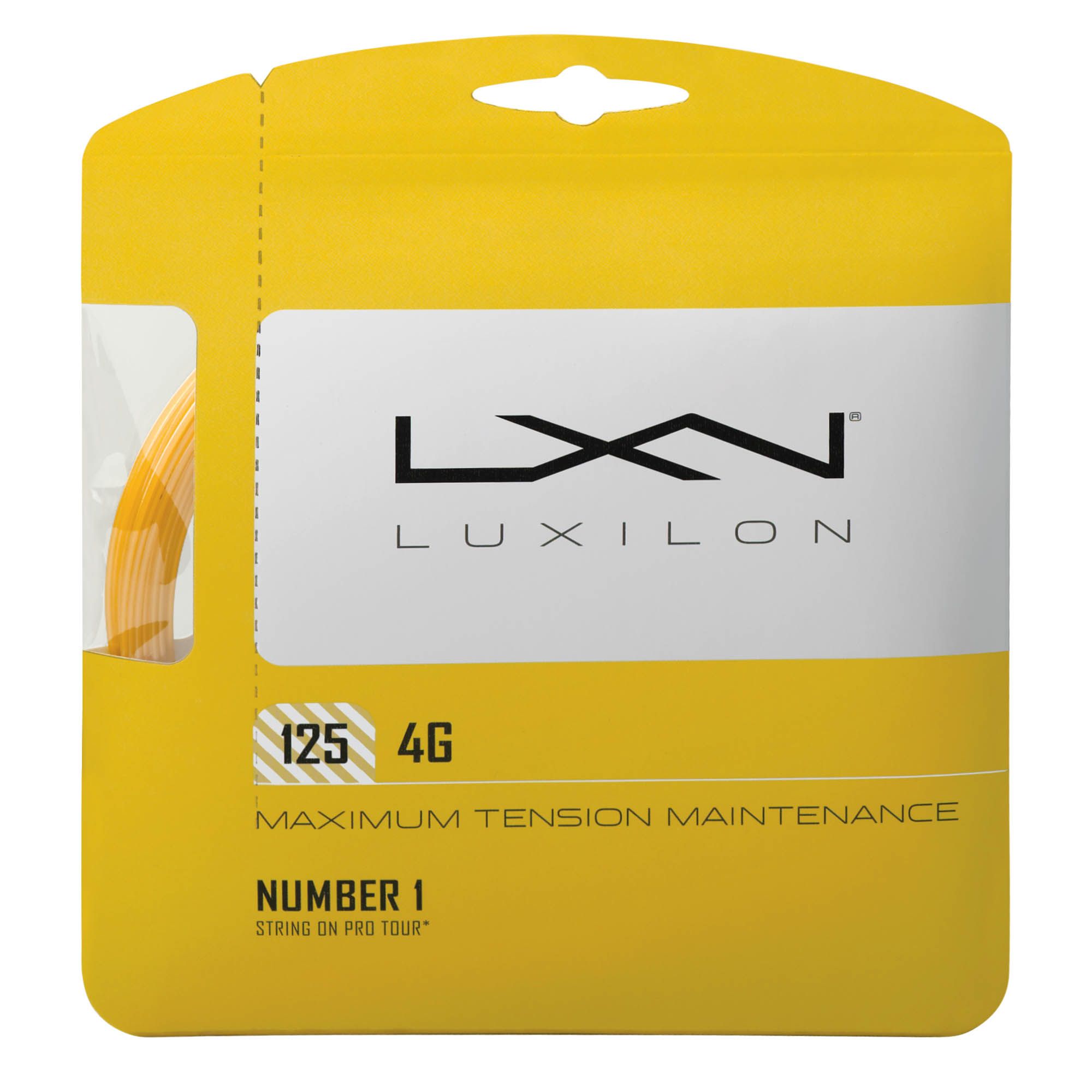
Babolat RPM Blast (₹749) — The gold standard for spin. Octagonal cross-section. Used by Carlos Alcaraz. | Luxilon ALU Power (₹1,500) — The most popular polyester tennis string on the ATP/WTA tour for decades. Excellent control with surprising touch. | Solinco Hyper-G (₹700) — Square-shaped profile for extreme spin. | Solinco Confidential (₹699) — Softer co-poly with good tension maintenance. | Head Sonic Pro (₹699) — Budget-friendly co-poly with decent comfort.
-
₹1,249.00Original price was: ₹1,249.00.₹749.00Current price is: ₹749.00. -
₹940.00Original price was: ₹940.00.₹700.00Current price is: ₹700.00. -
₹1,549.00Original price was: ₹1,549.00.₹699.00Current price is: ₹699.00. -
₹1,599.00Original price was: ₹1,599.00.₹999.00Current price is: ₹999.00. -
₹940.00Original price was: ₹940.00.₹699.00Current price is: ₹699.00. -
₹14,999.00Original price was: ₹14,999.00.₹8,999.00Current price is: ₹8,999.00. -
₹1,549.00Original price was: ₹1,549.00.₹699.00Current price is: ₹699.00. -
₹1,499.00Original price was: ₹1,499.00.₹975.00Current price is: ₹975.00. -
₹1,450.00Original price was: ₹1,450.00.₹799.00Current price is: ₹799.00. -
₹1,249.00Original price was: ₹1,249.00.₹749.00Current price is: ₹749.00. -
₹9,899.00Original price was: ₹9,899.00.₹5,900.00Current price is: ₹5,900.00. -
₹14,849.00Original price was: ₹14,849.00.₹9,649.00Current price is: ₹9,649.00. -
₹1,250.00Original price was: ₹1,250.00.₹749.00Current price is: ₹749.00. -
₹940.00Original price was: ₹940.00.₹699.00Current price is: ₹699.00. -
₹1,449.00Original price was: ₹1,449.00.₹699.00Current price is: ₹699.00. -
₹14,999.00Original price was: ₹14,999.00.₹8,999.00Current price is: ₹8,999.00. -
₹15,999.00Original price was: ₹15,999.00.₹9,599.00Current price is: ₹9,599.00. -
₹940.00Original price was: ₹940.00.₹699.00Current price is: ₹699.00. -
₹14,999.00Original price was: ₹14,999.00.₹8,999.00Current price is: ₹8,999.00. -
₹899.00Original price was: ₹899.00.₹499.00Current price is: ₹499.00.
2. Multifilament Strings — The Comfort King 🛡️
Multifilament tennis strings are constructed by weaving together hundreds or even thousands of microfibers — typically nylon-based — bonded with polyurethane. This construction is designed to mimic the feel and performance of natural gut at a significantly lower cost. Among all types of tennis strings, multifilament offers the best comfort-to-price ratio.
The result is a string that delivers a soft, cushion-like feel with excellent power. Because of their flexible, elastic construction, multifilament tennis strings absorb shock far better than polyester, making them the go-to choice for players dealing with arm injuries or anyone who prioritizes comfort. While not the best tennis strings for beginners due to higher cost, multifilament is the perfect upgrade from monofilament synthetic gut for intermediate players.
Tecnifibre pioneered commercial multifilament strings, and their NRG2 remains one of the closest synthetic alternatives to natural gut in terms of feel and playability.
✅ Pros
- Excellent comfort — arm-friendly and soft
- Good power output with minimal effort
- Better tension maintenance than polyester
- Affordable alternative to natural gut
- Great for players with tennis elbow
❌ Cons
- Lower durability — frays and breaks faster than poly
- Less spin potential than polyester
- Less control at higher swing speeds
- Performance varies widely between brands
Popular Multifilament Strings
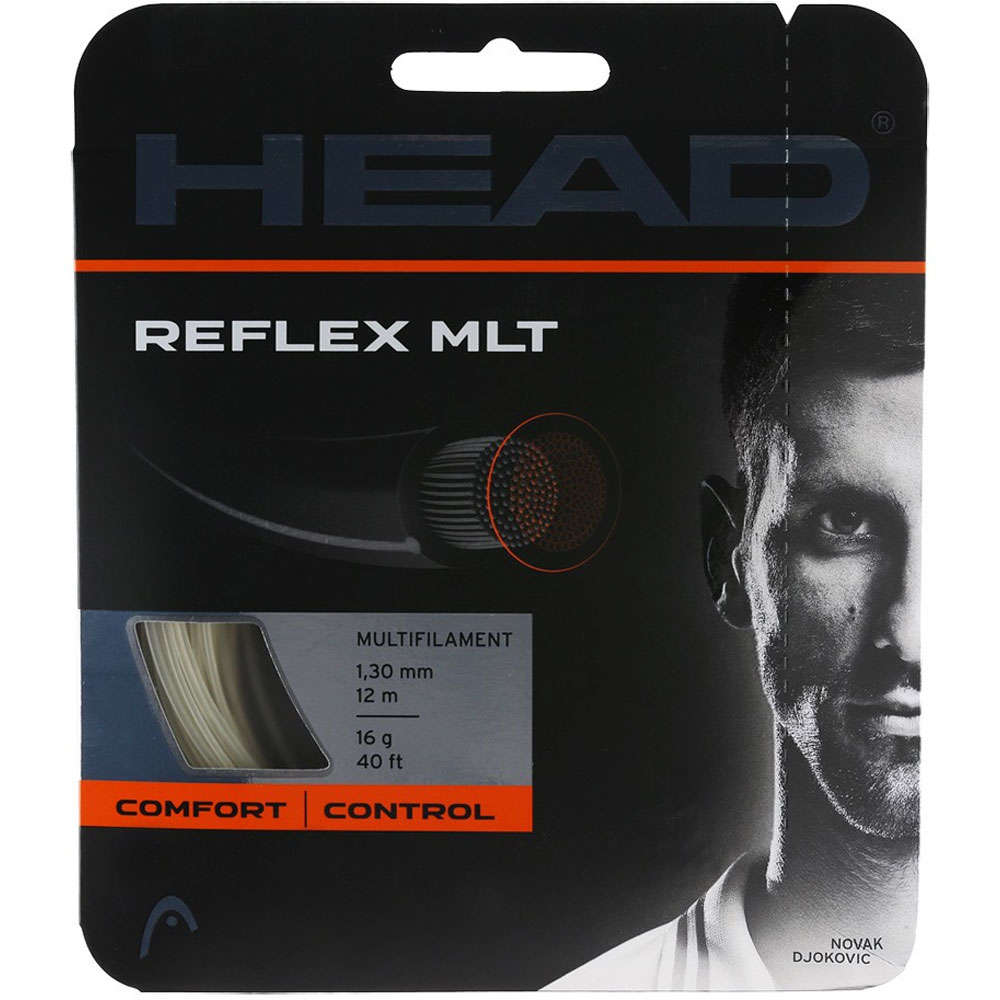
Tecnifibre NRG2 — Closest to natural gut feel. Excellent comfort and power. | Wilson NXT — Legendary comfort string. Great feel. | Babolat Xcel — Comfort-oriented multi with decent control. | Wilson Sensation — Well-rounded multi at a moderate price. | Head RIP Control — More control-oriented multifilament.
-
₹1,599.00Original price was: ₹1,599.00.₹1,199.00Current price is: ₹1,199.00.
Natural gut is the oldest and most premium string type, made from cow intestine fibers. It offers unmatched comfort, tension maintenance, and feel — but costs ₹2,500–5,000+ per set, degrades in humidity (bad for Indian monsoons), and is rarely available in India. Most players use it only in hybrid setups for tournaments. For practical purposes, multifilament strings are the best affordable alternative to natural gut. Roger Federer famously played with Babolat VS Touch (natural gut) in mains + Luxilon ALU Power in crosses throughout his career.
3. Monofilament (Synthetic Gut) Strings — The Budget All-Rounder 💵
Monofilament tennis strings — commonly known as synthetic gut — are constructed with a solid nylon monofilament core surrounded by one or more layers of filament wraps. The more wraps a synthetic gut has, the more durable and comfortable it becomes. Among all types of tennis strings, monofilament is the most budget-friendly option and the default choice for beginners and recreational players worldwide.
Synthetic gut does not excel in any single category — but it does not fail badly in any either. It offers a balanced blend of power, control, comfort, and durability at the lowest tennis string price point. If you are searching for the best tennis strings for beginners in India, monofilament synthetic gut is the safest starting point — giving you room to explore your playing style without spending too much.
Monofilament vs Multifilament — What's the Difference?
The key difference is construction. Monofilament strings use a single solid core (hence "mono"), making them crisper, more durable, and cheaper. Multifilament strings weave hundreds of microfibers together, making them softer, more powerful, and more arm-friendly — but also more expensive and less durable. Think of monofilament as the practical daily driver and multifilament as the comfort-focused upgrade.
✅ Pros
- Most affordable string type
- Good all-round performance
- Decent tension maintenance
- More durable than multifilament
- Available everywhere — easy to find
- Great for players still exploring their style
❌ Cons
- Average at everything — excels at nothing
- Crisper/stiffer feel than multifilament
- Less power than multifilament or natural gut
- Less spin than polyester
- Not ideal for competitive advanced play
-
₹1,500.00Original price was: ₹1,500.00.₹999.00Current price is: ₹999.00. -
₹2,085.00Original price was: ₹2,085.00.₹1,500.00Current price is: ₹1,500.00. -
₹1,249.00Original price was: ₹1,249.00.₹749.00Current price is: ₹749.00. -
₹1,500.00Original price was: ₹1,500.00.₹700.00Current price is: ₹700.00. -
₹2,085.00Original price was: ₹2,085.00.₹1,500.00Current price is: ₹1,500.00. -
₹1,149.00Original price was: ₹1,149.00.₹550.00Current price is: ₹550.00. -
₹1,299.00Original price was: ₹1,299.00.₹600.00Current price is: ₹600.00. -
₹1,500.00Original price was: ₹1,500.00.₹999.00Current price is: ₹999.00.
5. Hybrid Strings — Best of Both Worlds ⚡
A hybrid string setup uses two different string types — one in the vertical mains and another in the horizontal crosses. This allows players to combine the strengths of different strings while minimizing their individual weaknesses.
The general rule is that 70% of the string performance comes from the mains, and 30% from the crosses. This means the mains string has a bigger impact on how your racket feels and plays.
Common Hybrid Combinations
Natural Gut (mains) + Polyester (crosses) — The classic pro setup. Roger Federer played his entire career with this configuration (Babolat VS Touch mains + Luxilon ALU Power Rough crosses). Delivers excellent power and feel from the gut with added durability and control from the poly.
Polyester (mains) + Multifilament (crosses) — The "modern hybrid." Puts the spin-generating poly where it matters most (mains) while adding comfort from the multi in the crosses. This is becoming increasingly popular among competitive club players.
Polyester (mains) + Synthetic Gut (crosses) — Budget-friendly hybrid that adds some comfort to a full poly setup without the cost of multifilament crosses. Great for intermediate players on a budget.
✅ Pros
- Customizable to your exact needs
- Best balance of spin, comfort, and durability
- Extends the life of premium strings
- Reduces arm stress vs full poly bed
❌ Cons
- More expensive than single-string setup
- Requires experimentation to find ideal combo
- One string usually breaks before the other
- Not all stringers stock both types
If you are transitioning from synthetic gut to polyester but worried about arm comfort, start with a hybrid: polyester mains + multifilament crosses. This gives you spin improvement while keeping your arm safe. Sports Galaxy offers stringing services where we can set up any hybrid combination for you.
🇮🇳 India-Specific: Which String Type Works Best in Indian Conditions?
Playing tennis in India comes with unique challenges that affect your string choice. From extreme heat to monsoon humidity, choosing the right tennis strings in India requires understanding how climate impacts string tension and durability. Here is what you need to know.
Heat Factor (35°C+ Summers)
All strings lose tension faster in high temperatures. Polyester is the most affected — losing up to 25% tension in the first 24 hours under normal conditions, and even more in Indian summer heat above 35°C. If you play polyester in Indian summers, string 2–3 lbs tighter than your usual tension and expect to restring more frequently.
Multifilament and synthetic gut handle heat better than polyester in terms of tension maintenance. Natural gut performs well in dry heat but degrades in humidity.
Monsoon Season (June–September)
Humidity is the enemy of natural gut. If you play outdoors during monsoon months, avoid natural gut entirely. Polyester is the most moisture-resistant string type. Multifilament with polyurethane coating handles moderate humidity reasonably well.
Court Surface (Mostly Hard Courts)
India predominantly has hard courts (concrete/acrylic surface). Hard courts generate more vibration on impact than clay courts. If you play primarily on hard courts and experience arm discomfort, lean toward multifilament or a hybrid setup with softer crosses.
Recommended Tension Ranges for Indian Conditions
| String Type | Summer (35°C+) | Winter (15–25°C) | Monsoon (High Humidity) |
|---|---|---|---|
| Polyester | 48–55 lbs | 44–52 lbs | 46–53 lbs |
| Multifilament | 52–58 lbs | 50–56 lbs | 52–57 lbs |
| Natural Gut | 54–60 lbs | 52–58 lbs | ❌ Avoid |
| Synthetic Gut | 52–58 lbs | 50–56 lbs | 52–57 lbs |
| Hybrid | Poly: 48–54 / Multi: 50–56 | Poly: 44–50 / Multi: 48–54 | Poly: 46–52 / Multi: 50–55 |
If you are a recreational player (2–3 times per week), monofilament tennis strings at ₹249–400 are the best value. If you play competitively, polyester tennis strings at ₹499–749 per 12m set give you the best spin-to-cost ratio. Reels (200m) start from ₹5,900 and are more economical if you restring frequently.
Which String Type Should You Choose?
Use this quick decision guide to find your ideal string type based on your playing profile.
Tennis String Gauge Guide
String gauge refers to the thickness (diameter) of the string. In tennis, a lower gauge number means a thicker string — which can be confusing at first. Gauge affects durability, power, spin, and feel significantly.
| Gauge | Diameter | Durability | Power | Spin | Best For |
|---|---|---|---|---|---|
| 15 / 15L | 1.35–1.40mm | ⭐⭐⭐⭐⭐ | ⭐⭐ | ⭐⭐ | Chronic string breakers |
| 16 | 1.26–1.33mm | ⭐⭐⭐⭐ | ⭐⭐⭐ | ⭐⭐⭐ | Most common — balanced choice |
| 16L | 1.22–1.28mm | ⭐⭐⭐ | ⭐⭐⭐⭐ | ⭐⭐⭐⭐ | Power + spin seekers |
| 17 | 1.20–1.25mm | ⭐⭐ | ⭐⭐⭐⭐⭐ | ⭐⭐⭐⭐⭐ | Maximum feel and spin |
| 18 | 1.10–1.16mm | ⭐ | ⭐⭐⭐⭐⭐ | ⭐⭐⭐⭐⭐ | Touch players, rare use |
If you are unsure, start with 16 gauge (1.30mm) — it offers the best balance of all characteristics. If you want more feel and spin, go thinner (16L or 17). If you break strings often, go thicker (15L or 16).
Related Guides on Sports Galaxy
External Resources
For official regulations on approved strings and equipment standards, refer to the ITF Technical Centre.
Frequently Asked Questions
Ready to Choose Your Perfect Tennis String?
Sports Galaxy stocks polyester, multifilament, synthetic gut, and hybrid options from Babolat, Luxilon, Solinco, Head, Wilson, Tecnifibre, and Yonex — all at the best prices in India.
Shop All Tennis Strings →