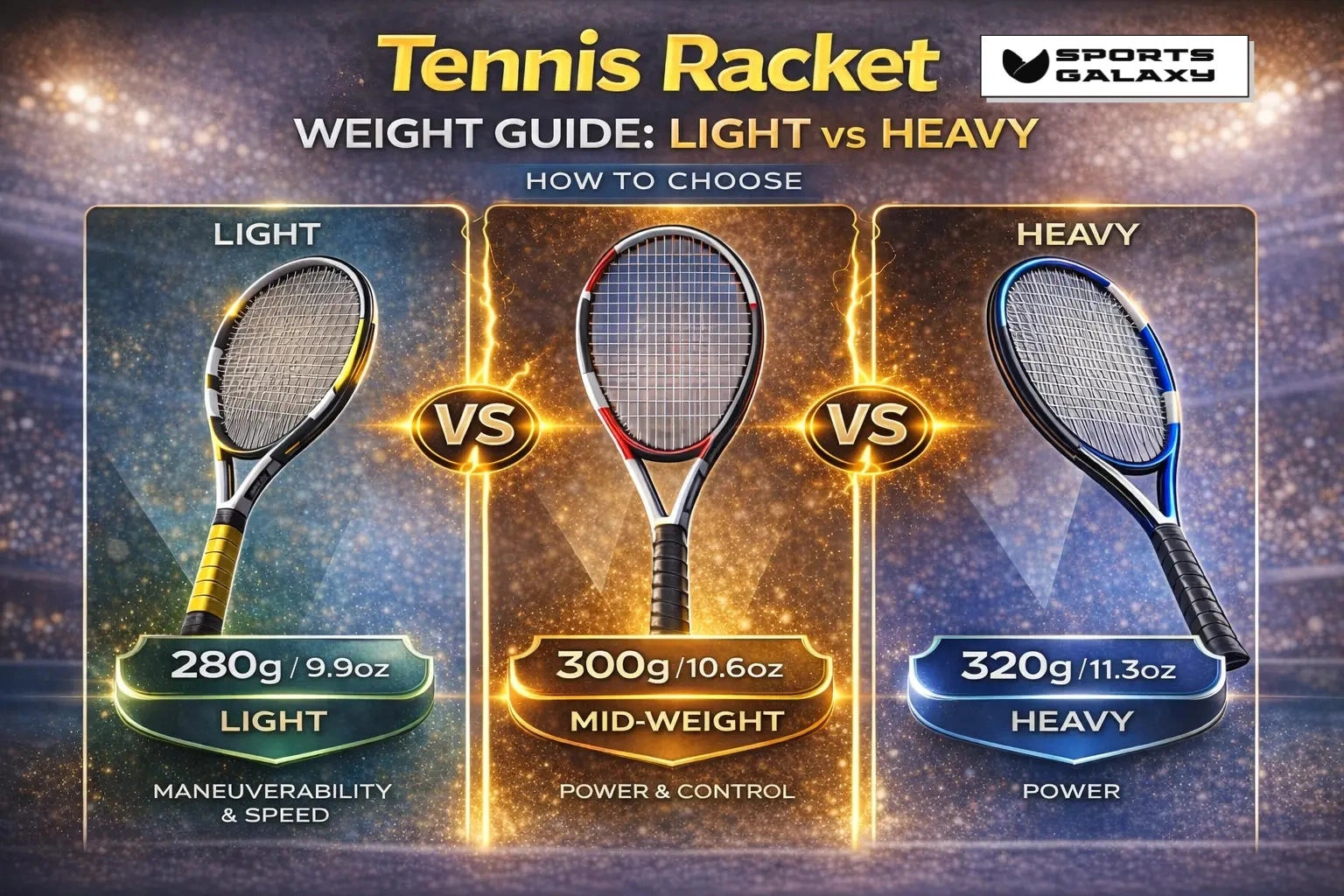
Most players spend hours comparing brands, colors, and string patterns — then completely ignore the single specification that affects their game more than anything else: tennis racket weight. The difference between a 265g racket and a 305g racket is not just 40 grams on a scale. It changes how fast you swing, how much power you generate, how your arm feels after two hours on court, and whether your technique develops correctly or hits a ceiling.
Here is the reality that racket manufacturers do not always make obvious: every popular racket model — the Babolat Pure Aero, the HEAD Speed, the Wilson Blade, the Yonex EZONE — comes in multiple weight variants. The Babolat Pure Aero 2026, for example, is available in 260g (Evo Aero Lite), 275g (Evo Aero), 285g (Pure Aero Team), and 300g (Pure Aero). Same design DNA, same brand — completely different playing experience depending on which weight you pick.
This guide breaks down exactly what each weight category feels like on court, who it suits best, and which rackets at Sports Galaxy's tennis racket collection fall into each tier. Whether you are a beginner buying your first adult racket, an intermediate player wondering if your current frame is holding you back, or a competitive player looking for more control — the right weight makes the difference between fighting your equipment and playing your best tennis.
WHAT TENNIS RACKET WEIGHT ACTUALLY MEANS — THE BASICS
Before comparing specific weights, you need to understand two numbers that appear on every racket specification sheet — because confusing them is the most common mistake players make when shopping online.
Strung vs Unstrung Weight
Unstrung weight is the weight of the bare frame without strings installed. This is the number manufacturers print on the racket and list on product pages. Strung weight is the total weight after strings are installed — typically 15–20g heavier than the unstrung number. So a racket listed as "300g unstrung" will actually weigh approximately 315–320g in your hand when you play with it.
Every weight mentioned in this guide refers to unstrung weight unless specifically noted — because that is the industry standard and the number you will see when shopping at Sports Galaxy or any other tennis retailer.
Why Weight Matters More Than Brand
A 260g Babolat and a 260g Yonex will feel more similar to each other than a 260g Babolat and a 300g Babolat from the same product line. Weight is the single biggest factor determining how a racket feels in your hand and how it performs on court. While the International Tennis Federation (ITF) does not set a maximum weight limit for rackets, it directly affects four things: maneuverability (how quickly you can swing and react), power (how much force transfers to the ball), stability (how much the frame twists on off-center hits), and fatigue (how your arm and shoulder feel after extended play).
The tradeoff is straightforward: lighter rackets are easier to swing but less stable, while heavier rackets provide more power and stability but demand better technique and physical conditioning. Finding the right balance point for your body, skill level, and playing style is what this guide is about.
📏 Quick Weight Classification
Lightweight: 260–280g — Easy to swing, forgiving, ideal for beginners and recreational players. Mid-weight: 285–300g — The sweet spot for most intermediate to advanced players, balancing power and control. Heavyweight: 300–320g — Maximum stability and power for competitive players with developed technique.
LIGHTWEIGHT TENNIS RACKETS (260–280G) — WHO THEY ARE BUILT FOR
Lightweight rackets in the 260–280g range are designed for one primary purpose: making tennis accessible and enjoyable without demanding peak physical conditioning. Understanding this tennis racket weight category is essential if you are picking up a racket for the first time, returning to tennis after years away, or playing in India's 35°C+ summer heat where every gram matters after the first hour — this is your weight class.
What Lightweight Rackets Do Well
Faster swing speed is the most immediate benefit. A 265g racket accelerates significantly faster than a 300g frame, which means you can react to fast shots, get your racket into position for late balls, and generate racket head speed without a fully developed swing. For beginners still building proper stroke mechanics, this forgiveness is critical — it lets you focus on footwork and timing rather than muscling the racket around.
Reduced fatigue matters more than most players realize — and it is directly tied to tennis racket weight. In Indian conditions — outdoor courts in Gurugram, Mumbai, Chennai, or Bengaluru during summer — heat and humidity drain energy fast. A lightweight racket lets you play longer sessions without your arm and shoulder breaking down. This is especially important for recreational players who play 2–3 times per week and want to enjoy their court time rather than recover from it.
Better maneuverability at the net is an underrated advantage. Doubles players and anyone who approaches the net regularly benefits from a lighter frame that can be repositioned quickly for volleys and reflex shots.
What Lightweight Rackets Sacrifice
The tradeoff is real: lighter rackets are less stable on off-center hits. When you do not strike the ball cleanly in the sweet spot, a lightweight frame twists more in your hand — resulting in less control and more vibration transmitted to your arm. This is the fundamental tennis racket weight compromise — they also generate less power through mass, meaning you need to supply more of the power yourself through swing speed. And because they absorb less impact shock, lightweight rackets paired with stiff polyester strings can actually increase arm discomfort — a counterintuitive point that many beginners miss.
💡 String Tip for Lightweight Rackets
If you play with a racket under 280g, use multifilament strings rather than polyester. Multifilament strings absorb vibration better and provide more power — compensating for the two areas where lightweight rackets are weakest. A good starting tension is 52–55 lbs.
Who Should Play with 260–280g Rackets
This tennis racket weight tier is ideal for absolute beginners learning their first strokes, women players who prefer a maneuverable frame, senior players (50+) prioritizing comfort and joint protection, junior players transitioning to adult rackets (ages 13–15), and anyone playing primarily in hot Indian conditions where fatigue management is a factor. If you are not sure where to start, 270–280g is the safest entry point — light enough to be comfortable but heavy enough to provide decent stability.
Best Lightweight Rackets at Sports Galaxy
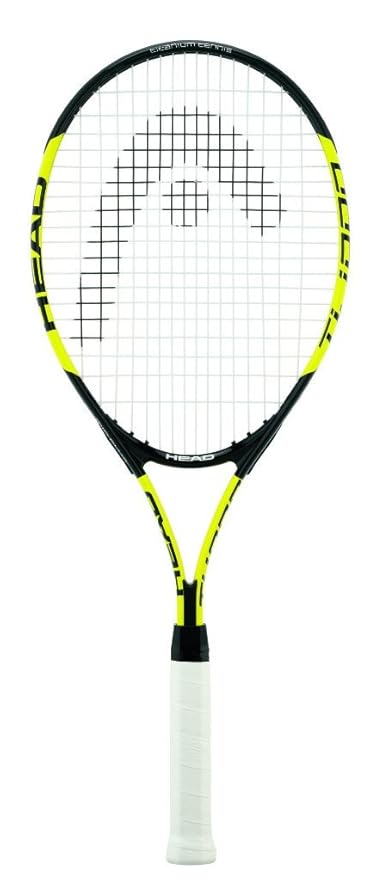
Budget Starter — 280g
HEAD Ti 1000 Tennis Racket (280g)
HEAD's most affordable entry point. Titanium-graphite construction with a large head for maximum forgiveness. At 280g, it sits at the top of the lightweight range — offering slightly more stability than ultra-light options while remaining easy to swing for first-time players.
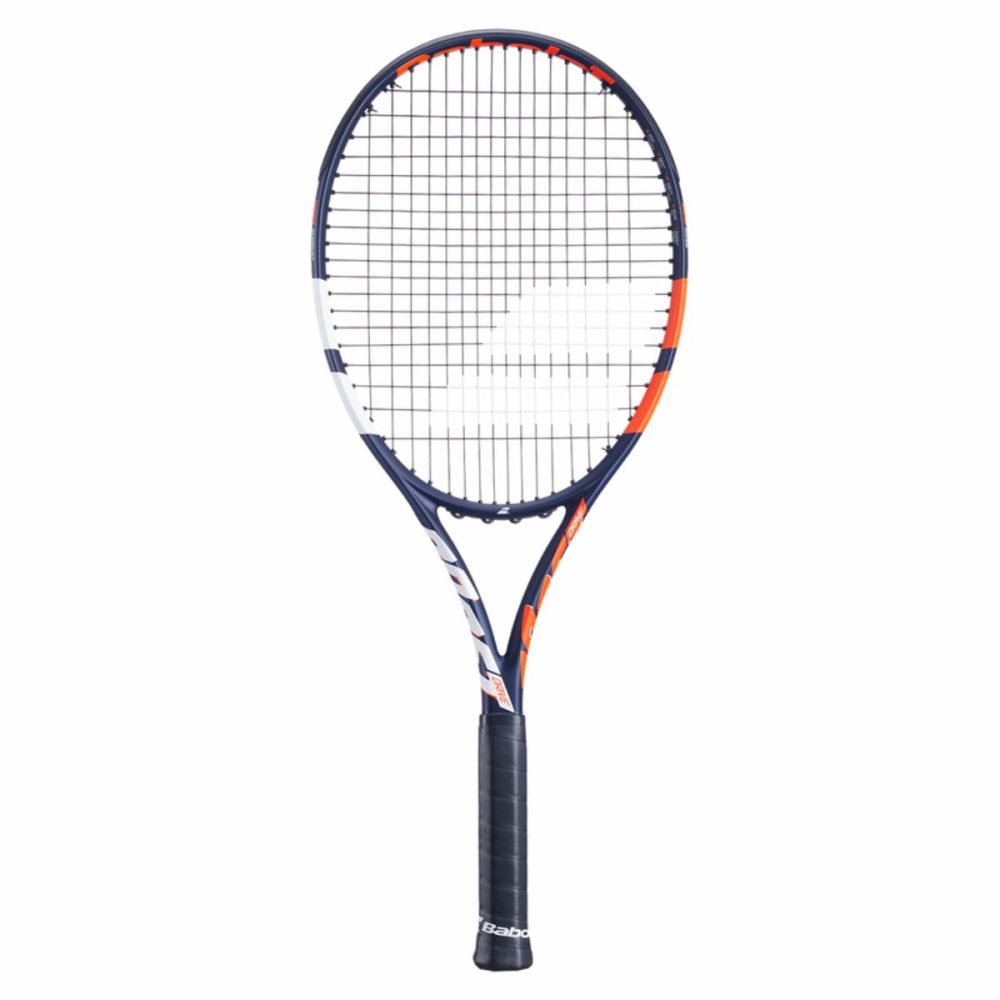
Lightweight Power — 260g
Babolat Boost Drive Tennis Racket (260g)
Based on the legendary Pure Drive design but 40g lighter. Babolat's power-oriented frame geometry in a beginner-friendly weight. One of the most popular lightweight rackets in India for players who want brand-level engineering without the weight commitment.
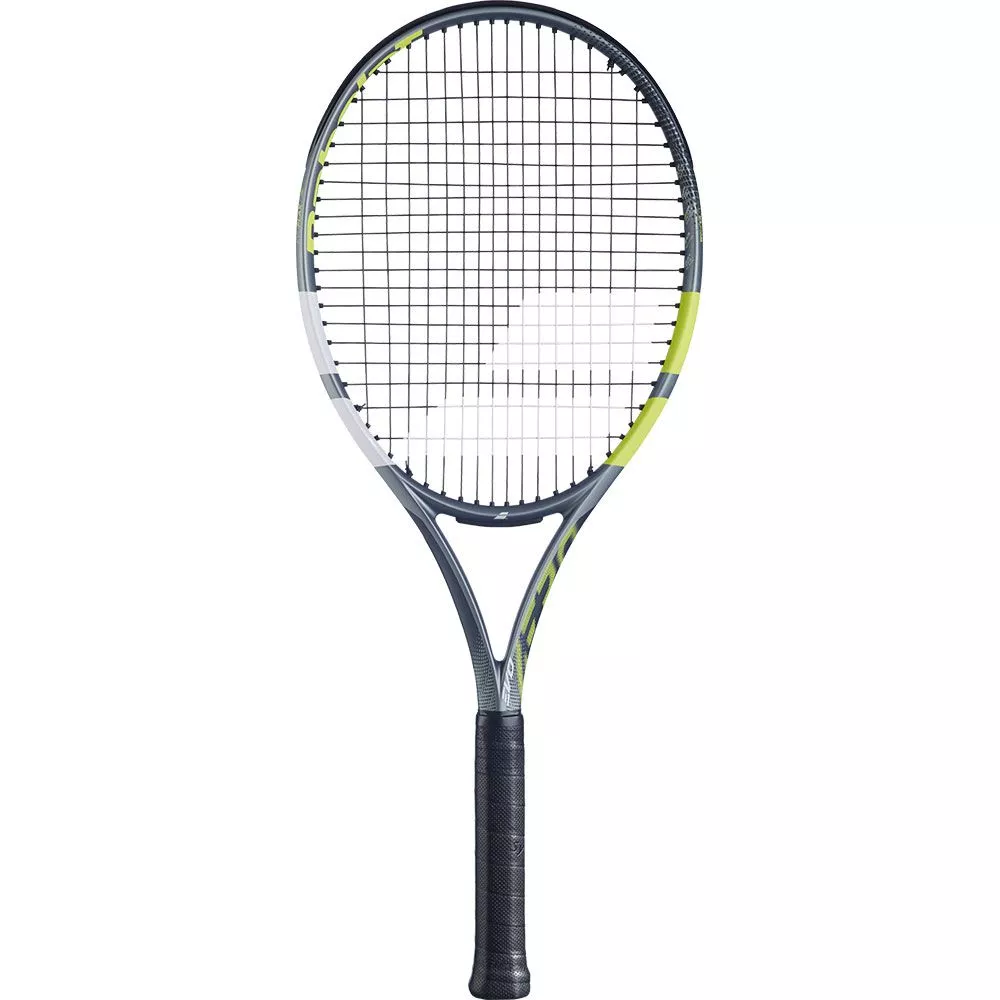
Spin-Focused Lightweight — 275g
Babolat Evo Aero 2026 Tennis Racket (275g)
The 2026 Evo Aero brings Babolat's signature aerodynamic beam design to the lightweight category. At 275g, it is the ideal bridge between pure beginner rackets and the performance-tier Pure Aero line. Excellent for developing players who want spin potential without heavy weight.
For the complete range of lightweight tennis rackets across HEAD, Babolat, Wilson, and Yonex — browse all tennis rackets at Sports Galaxy.
MID-WEIGHT TENNIS RACKETS (285–300G) — THE SWEET SPOT FOR MOST PLAYERS
If there is one tennis racket weight range that suits the widest possible audience, it is 285–300g. This is where the majority of adult performance rackets live — and for good reason. Mid-weight frames offer enough mass to provide genuine stability and power, while remaining light enough for comfortable extended play. Every major brand's flagship model — the Babolat Pure Aero, Pure Drive, and Pure Strike, the HEAD Speed, the Wilson Blade, the Yonex EZONE and VCORE — has its standard variant in this exact weight range.
What Mid-Weight Rackets Do Well
Versatility is the defining characteristic of this tennis racket weight range. A 285–300g racket does not force you into a specific playing style. Baseline players get enough mass for penetrating groundstrokes. Net players get acceptable maneuverability for volleys. Serve-oriented players get sufficient weight to drive through the ball on serves. You are not locked into being a power player or a control player — the racket adapts to your game rather than dictating it.
Better stability on off-center hits compared to lightweight frames. The additional mass keeps the racket face more stable when you do not hit the sweet spot perfectly — which happens to every player, even professionals. This translates directly to more consistent shots and fewer mishits that fly unpredictably.
Improved vibration absorption is a significant health benefit. Mid-weight rackets absorb more impact shock than lightweight frames, which means less vibration reaching your elbow and wrist. This is why many coaches and physiotherapists recommend moving to a slightly heavier racket — not lighter — when players experience arm discomfort. The extra mass acts as a shock absorber.
The 285g vs 300g Decision
Within this tier, there is an important distinction. Rackets at 285g (often labeled "Team" or "L" variants) sit at the lighter end of mid-weight — they offer a taste of performance-level stability while remaining comfortable for players who are still developing. Popular examples include the Babolat Pure Aero Team (285g), HEAD Speed MP L (285g), Wilson Blade 100L (285g), and Yonex EZONE 100L (285g).
Rackets at 300g are the standard "full" versions — the ones professional players often start with before customizing. The Babolat Pure Aero (300g), HEAD Speed MP (300g), Wilson Blade 100 (300g), and Yonex EZONE 100 (300g) are all 300g frames. These demand better technique and physical conditioning but reward you with maximum stability and power within the mid-weight category.
A useful rule of thumb for this tennis racket weight decision: if you have been playing regularly for less than two years or play fewer than three times per week, start with the 285g "Team" or "L" version. If you have solid stroke mechanics and play three or more times weekly, the 300g standard version will serve you better long-term.
🎯 The Most Popular Weight in Tennis
300g unstrung is the single most common weight for adult performance rackets globally. When tennis coaches say "get a proper racket," they almost always mean a racket in the 295–305g range. It is the weight that the largest number of intermediate-to-advanced players gravitate toward — and the weight that most racket models are originally designed around before lighter variants are created.
Who Should Play with 285–300g Rackets
This tier suits intermediate players with developed stroke mechanics, regular club players competing in local leagues, advanced beginners who have outgrown their starter racket, coaching academy students (ages 15+) training seriously, and doubles and singles players who want one racket that works for both formats. If you are upgrading from a lightweight starter racket and want a meaningful improvement in shot quality, moving into the 285–300g tennis racket weight range is the single most impactful change you can make.
Best Mid-Weight Rackets at Sports Galaxy
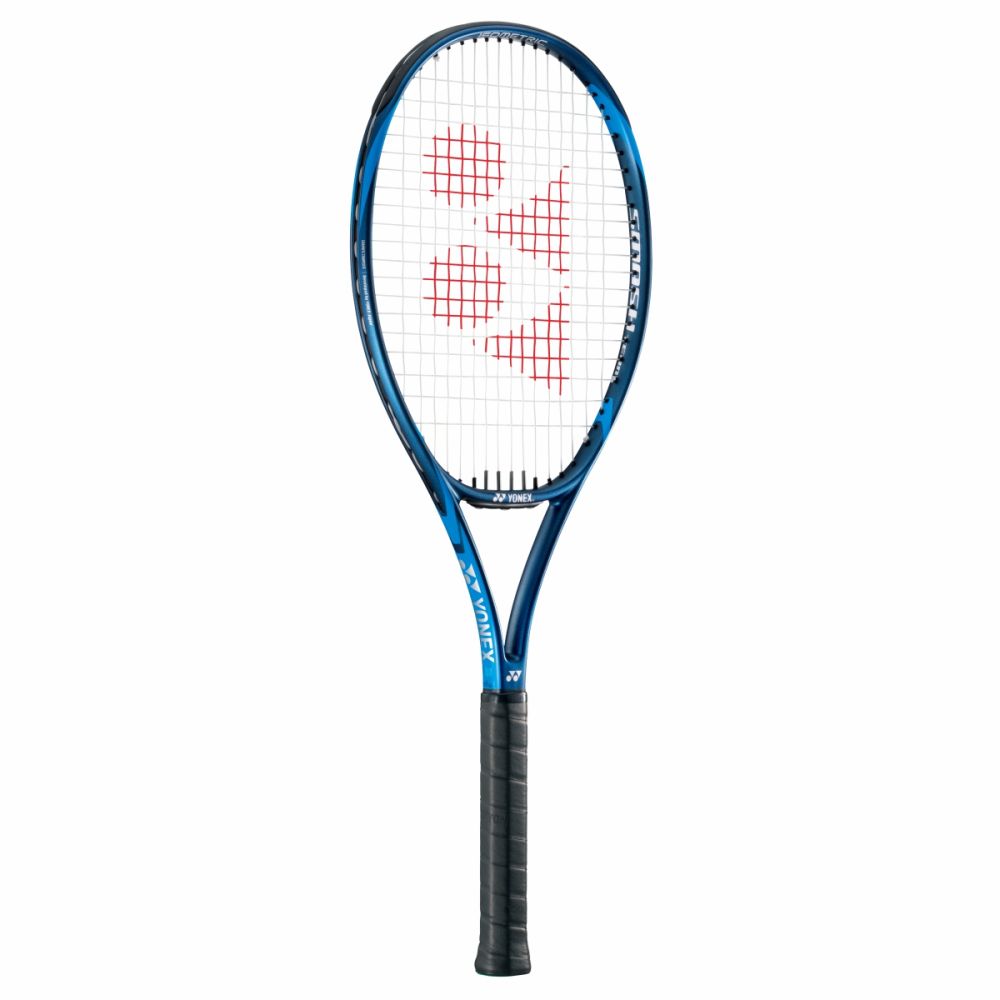
Affordable Mid-Weight — 290g
Yonex Smash Team Tennis Racket (290g)
Yonex quality at an entry-level price point. At 290g, the Smash Team sits perfectly in the mid-weight zone — heavy enough for stability, light enough for comfort. An excellent first "real" racket for players stepping up from budget options.
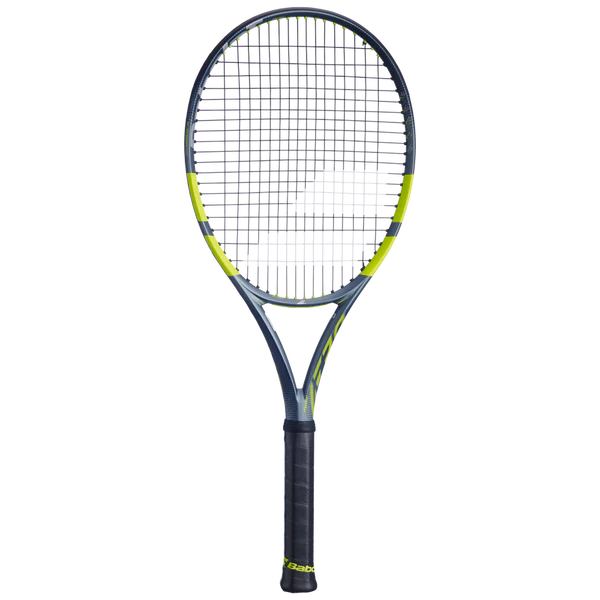
Performance Lightweight — 285g
Babolat Pure Aero Team 2026 Tennis Racket (285g)
The lighter sibling of the racket used by Carlos Alcaraz. Same aerodynamic beam and spin-generating string pattern as the full Pure Aero, but 15g lighter for improved maneuverability. The most popular "step-up" racket for developing players who want tour-level spin without tour-level weight.
Tour Standard — 300g
Babolat Pure Aero 2026 Tennis Racket (300g)
The racket that defines modern spin tennis — 14 ATP top-100 players use this frame, including world #1 Carlos Alcaraz. At 300g unstrung, it delivers the full stability and power of the Pure Aero platform. The benchmark against which all spin rackets are measured.
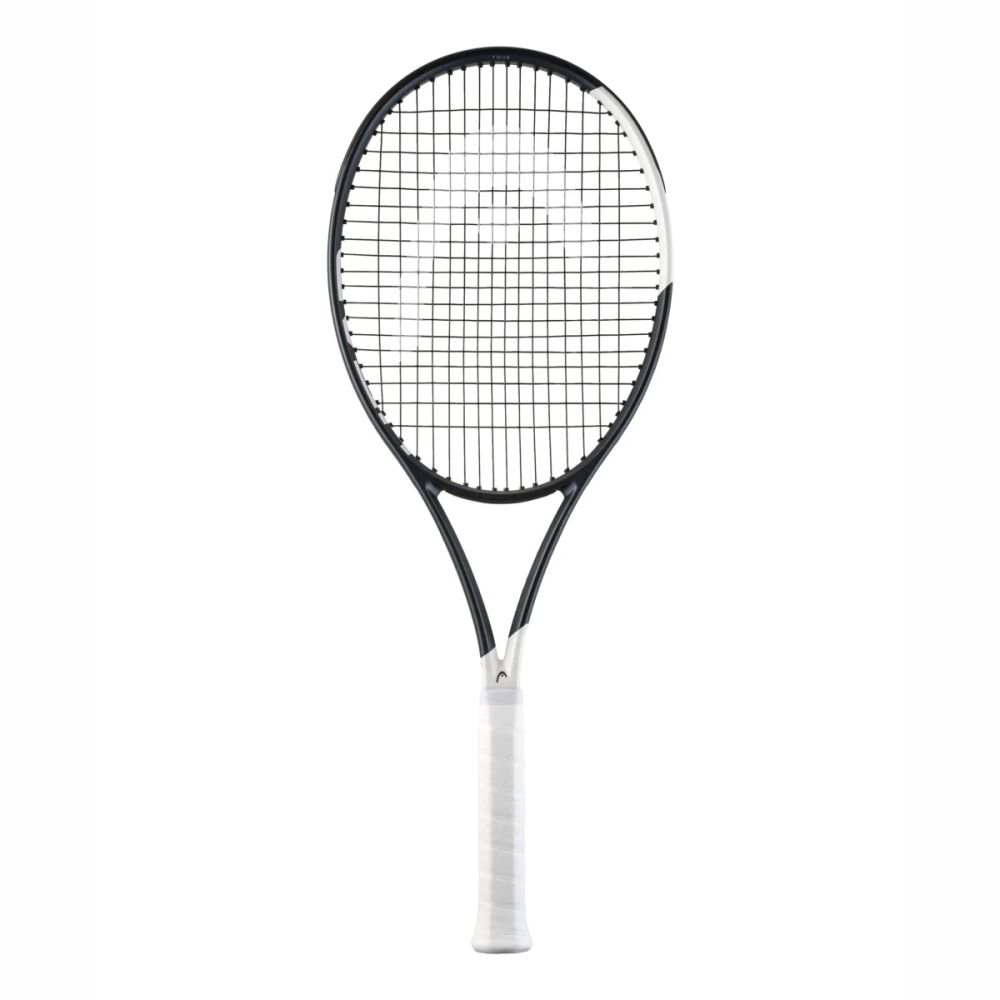
Control + Speed — 300g
HEAD Speed MP 2026 Tennis Racket (300g)
HEAD's 2026 Speed line features Hy-Bor technology for enhanced feel and responsiveness. At 300g, the Speed MP is the quintessential all-court racket — balanced between power and control, equally effective from the baseline and the net.
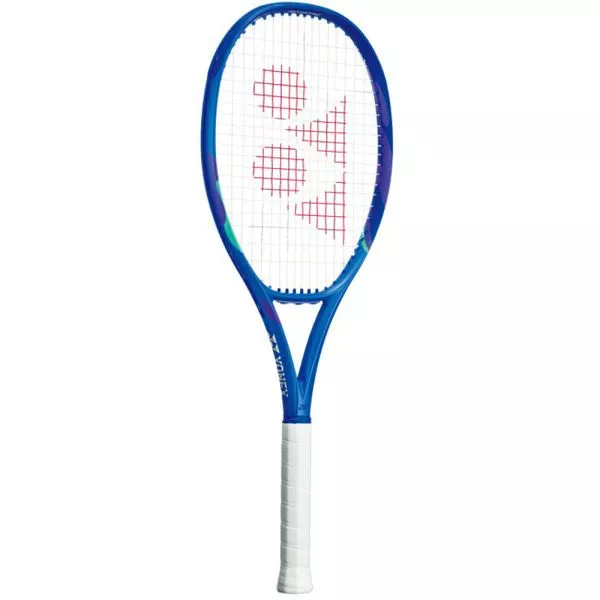
Comfort + Power — 300g
Yonex EZONE 100 2025 Tennis Racket (300g)
Yonex's isometric head shape creates a 7% larger sweet spot than conventional round heads — making the EZONE 100 the most forgiving 300g racket on the market. Ideal for players who want tour-level weight without sacrificing comfort.
For the complete range of mid-weight tennis rackets including the Wilson Blade, Yonex VCORE, Yonex Percept, and Babolat Pure Strike — browse all tennis rackets at Sports Galaxy.
HEAVYWEIGHT TENNIS RACKETS (300–320G) — FOR SERIOUS COMPETITIVE PLAYERS
Rackets above 300g unstrung are built for players who have already developed solid technique and physical conditioning. This tennis racket weight class is where you find 98 sq in head sizes, dense string patterns, and frames designed for precision over forgiveness. If the mid-weight category is about versatility, the heavyweight category is about control and authority — giving advanced players the tools to dictate points rather than react to them.
What Heavyweight Rackets Do Well
Maximum stability is the primary advantage of this tennis racket weight class. A 310g or 315g frame barely moves on off-center hits. This means your mishits still go roughly where you intended, your volleys stay firm, and your return of serve does not get pushed around by heavy incoming pace. For competitive players facing fast serves and aggressive groundstrokes, this stability is not a luxury — it is a necessity.
Superior power through mass. Physics is straightforward here: more mass moving through the ball means more momentum transfer. Heavyweight rackets produce deeper, more penetrating shots with less effort from the player. Advanced players do not need to swing harder — they let the racket's mass do the work. This is why professional players overwhelmingly use rackets in the 305–340g strung weight range.
Better vibration dampening. Heavier frames absorb more impact shock, which means less vibration reaching your arm. Counterintuitively, many players who experience arm discomfort with lightweight rackets find relief by moving to a slightly heavier frame — because the additional mass acts as a natural dampener.
What Heavyweight Rackets Demand
There is no shortcut here: heavyweight rackets require developed technique, physical strength, and regular play. If your swing mechanics are not solid, a heavy racket will amplify your technical flaws rather than compensate for them. Getting your tennis racket weight wrong at this level has real consequences — a 315g frame swung with poor technique produces worse results than a 280g frame swung correctly. These rackets also cause faster fatigue in players who are not physically conditioned for them — and fatigue leads to technique breakdown, which leads to reduced performance and potential arm issues.
The honest recommendation: if you are not playing at least three times per week with competitive-level rallies, a heavyweight racket is probably more than you need. The mid-weight tier (285–300g) will serve you better.
Who Should Play with 300–320g Rackets
This tennis racket weight class is designed for competitive tournament players, advanced club players with years of regular play, coaching academy players (17+) training at a high level, serve-and-volley players who need stability at the net, and singles specialists who generate their own power and prioritize control. If you consistently play against strong opponents, hit with proper technique, and have the physical conditioning to sustain heavy racket play for 90+ minutes — this tier unlocks a level of control and precision that lighter rackets cannot match.
Best Heavyweight Rackets at Sports Galaxy
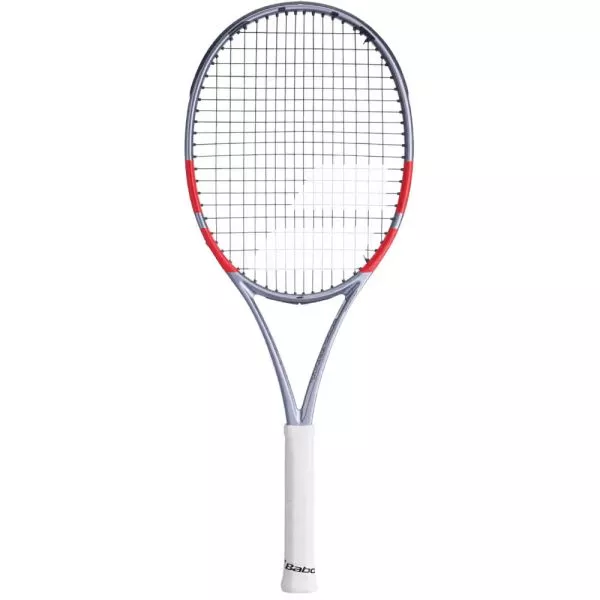
Control Weapon — 305g
Babolat Pure Strike 98 16×19 4th Gen (305g)
Babolat's precision frame for players who want pinpoint control with spin potential. The 98 sq in head and 305g weight deliver a compact, responsive feel that rewards clean ball-striking. The racket of choice for aggressive baseliners who generate their own power.
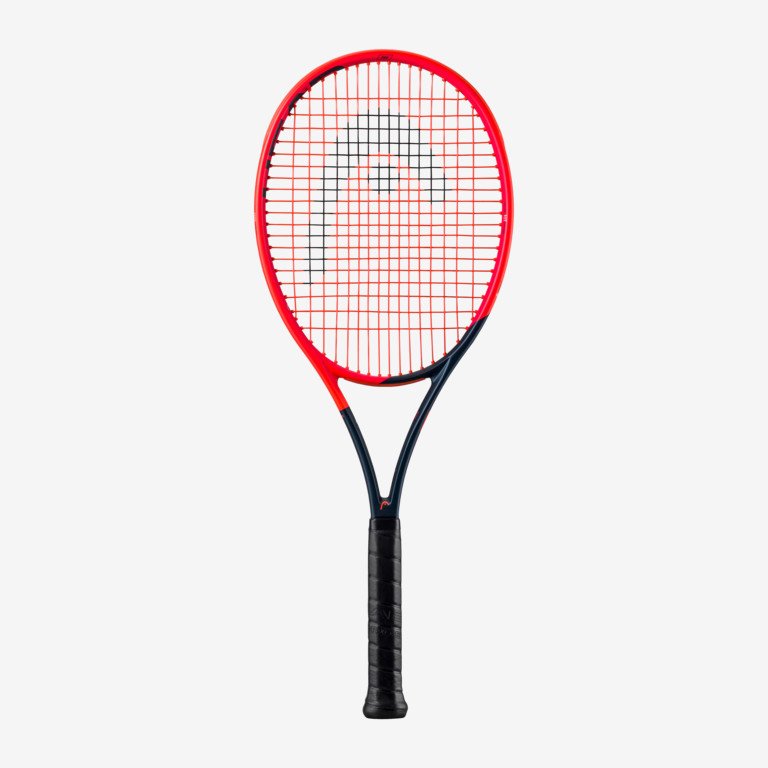
Tour Weapon — 315g
HEAD Radical Pro 2023 Tennis Racket (315g)
HEAD's heaviest performance frame for advanced players demanding maximum control. At 315g unstrung, the Radical Pro provides rock-solid stability that absorbs heavy incoming pace and converts it into precise, redirected shots.

Pro Specification — 320g
Wilson RF 01 Pro Tennis Racket 16×19 (320g)
The heaviest racket in the Sports Galaxy collection — inspired by Roger Federer's playing specifications. At 320g unstrung (approximately 340g strung), this is a genuine pro-level frame for players with exceptional technique and physical conditioning. Not for the faint-hearted.
For the complete range of heavyweight rackets including the Wilson Shift 99 Pro (315g), HEAD Speed Pro (310g), and Yonex Percept 97 (310g) — browse all tennis rackets at Sports Galaxy.
TENNIS RACKET WEIGHT COMPARISON — ALL THREE TIERS SIDE BY SIDE
Here is the complete tennis racket weight comparison across all three categories. Use this table to quickly identify which tier matches your player profile.
| Factor | Lightweight (260–280g) | Mid-Weight (285–300g) | Heavyweight (300–320g) |
|---|---|---|---|
| Best For | Beginners, women, seniors, juniors | Intermediate to advanced all-rounders | Competitive tournament players |
| Maneuverability | Excellent — fast swings, quick reactions | Good — balanced speed and control | Moderate — requires strong technique |
| Power | Player-generated (you supply it) | Balanced (racket + player together) | Racket-assisted (mass does the work) |
| Stability | Low — frame twists on off-center hits | Good — handles most impacts well | Excellent — rock-solid on contact |
| Vibration Absorption | Low — more shock reaches your arm | Moderate — decent dampening | High — natural shock absorber |
| Fatigue Factor | Low — play for hours comfortably | Moderate — manageable for regular players | High — demanding over long sessions |
| Skill Requirement | None — forgiving and accessible | Intermediate technique needed | Advanced technique essential |
| Typical Head Size | 102–110 sq in | 100–105 sq in | 95–100 sq in |
| Playing Style | Defensive baseline, doubles | All-court, versatile | Aggressive baseline, serve + volley |
| Price Range (₹) | ₹2,500 – ₹14,000 | ₹3,800 – ₹23,000 | ₹17,900 – ₹26,000 |
| Indian Climate Suitability | Excellent for hot summers | Good with proper hydration | Challenging in extreme heat |
SWING WEIGHT — THE HIDDEN SPEC THAT MATTERS MORE THAN STATIC WEIGHT
Here is something that most tennis racket weight guides do not tell you: the number printed on your racket (static weight) is only half the story. Two rackets that both weigh 300g can feel completely different in your hand — one might feel maneuverable and whippy, while the other feels sluggish and heavy. The difference is swing weight.
What Is Swing Weight?
Swing weight measures how heavy a racket feels when you actually swing it — not just when you hold it still. It depends on where the weight is distributed along the frame, not just how much total weight exists. As Wilson's racket guide explains, weight and head size work together — a 300g racket with most of its mass concentrated in the head (head-heavy balance) will have a higher swing weight — and feel heavier to swing — than a 300g racket with mass concentrated in the handle (head-light balance). Swing weight is measured in units called kg·cm² and typically ranges from 290 to 340 for adult rackets.
Why This Matters for Your Purchase Decision
When you read that a racket weighs 285g, you know its static tennis racket weight — but you do not know how it will feel in motion. A head-heavy 280g racket can feel heavier to swing than a head-light 300g racket. This is why two rackets in the same weight category can produce very different playing experiences. Head-heavy rackets generate more power from the baseline but are slower to maneuver at the net. Head-light rackets offer faster reactions and better net play but require the player to generate more power through technique.
For most recreational and intermediate players, the practical takeaway is simple: if a racket in your target weight range feels "too heavy" when you demo it, the issue might not be the static weight — it might be the balance distribution. Try a racket with the same weight but a head-light balance before moving down an entire weight class.
💡 Quick Balance Guide
Head-heavy balance (balance point above 33cm): More power, more stable, feels heavier — common in lightweight rackets to compensate for low mass. Head-light balance (balance point below 33cm): More maneuverable, better for net play, feels lighter — common in heavyweight rackets to keep them manageable. Even balance (balance point at ~33cm): Neutral feel, versatile — common in mid-weight all-round rackets.
CHOOSING THE RIGHT TENNIS RACKET WEIGHT FOR INDIAN CONDITIONS
Most international racket guides are written for players in moderate European or American climates. India's playing conditions are different — and those differences should influence your tennis racket weight choice.
Heat and Humidity Factor
When you play outdoors in Delhi at 42°C or Mumbai at 35°C with 80% humidity, your grip weakens, your muscles fatigue faster, and your reaction time drops — all within the first 30–45 minutes. A racket that feels perfectly comfortable in an air-conditioned demo room can feel exhausting after an hour in Indian summer heat. The practical tennis racket weight implication: Indian players should generally aim for the lighter end of their ideal weight range. If the guide says you suit 285–300g, start with 285g. If you are between lightweight and mid-weight, lean toward lightweight. You can always add weight to a racket with lead tape — you cannot remove it.
Court Surface Considerations
India primarily has hard courts (cement and acrylic) and clay courts (fewer, mostly at premium clubs). Hard courts produce faster, higher-bouncing balls that demand quicker racket preparation — favoring lighter, more maneuverable frames. If your home court is a fast hard court, factor this into your tennis racket weight decision. Clay court players can afford slightly heavier rackets because the slower ball speed gives more preparation time.
Budget Tiers — What Each Price Range Gets You
| Budget (₹) | What You Get | Weight Range | Example at Sports Galaxy |
|---|---|---|---|
| ₹2,500 – ₹5,000 | Aluminum/titanium composite, pre-strung, large head | 265–290g | HEAD Ti 1000 (₹2,580), Yonex Smash Team (₹3,849) |
| ₹5,000 – ₹10,000 | Graphite composite, brand engineering, better feel | 260–295g | Babolat Boost Drive (₹7,377), HEAD IG Challenge (₹7,199) |
| ₹10,000 – ₹16,000 | Full graphite, advanced tech, performance-tier | 260–300g | Yonex EZONE 100 (₹15,535), Babolat Evo Aero (₹14,099) |
| ₹16,000 – ₹26,000 | Tour-level, latest generation, pro specifications | 285–320g | Babolat Pure Aero (₹22,739), HEAD Speed MP (₹21,120) |
HOW TO CHOOSE YOUR IDEAL TENNIS RACKET WEIGHT — DECISION FRAMEWORK
Use this table to match your personal profile to the right tennis racket weight tier. Find the description that fits you best.
| Your Profile | Recommended Weight | Top Pick at Sports Galaxy |
|---|---|---|
| Complete beginner, never played tennis | 260–275g | Babolat Boost Drive (260g) — ₹7,377 |
| Beginner on a tight budget | 280–290g | HEAD Ti 1000 (280g) — ₹2,580 |
| Woman player, recreational | 260–280g | Babolat Boost Aero Pink (260g) — ₹7,789 |
| Senior player (50+) | 260–280g | Babolat Evo Aero Lite (260g) — ₹13,319 |
| Intermediate, 1–3 years playing | 285–295g | Babolat Pure Aero Team (285g) — ₹21,699 |
| Advanced club player, plays 3+ times/week | 295–305g | Babolat Pure Aero (300g) — ₹22,739 |
| Competitive tournament player | 305–320g | Wilson Shift 99 (315g) — ₹21,449 |
| Player experiencing arm discomfort | 285–305g (head-light) | Yonex Percept 100 (300g) — ₹15,900 |
| Doubles specialist | 280–295g | HEAD Speed MP L (285g) — ₹20,150 |
| All-court player wanting one versatile racket | 295–300g | Yonex EZONE 100 (300g) — ₹15,535 |
💡 The Golden Rule of Racket Weight
The golden rule of tennis racket weight: choose the heaviest racket you can swing comfortably for a full session without your arm, shoulder, or technique breaking down. This gives you the maximum stability and power benefit while staying within your physical limits. If in doubt between two weights, start with the lighter option — you can always add lead tape to increase weight, but you cannot make a racket lighter.
RACKET WEIGHT AND ARM COMFORT — WHAT MOST PLAYERS GET WRONG
One of the most common misconceptions about tennis racket weight is that lighter rackets are always better for players with arm discomfort. The logic seems intuitive: lighter racket = less stress on the arm. But the reality is more nuanced — and getting this wrong can make arm problems worse.
Why Lighter Is Not Always Better for Your Arm
When a lightweight racket (under 280g) strikes the ball, its low mass means it decelerates sharply on contact. The ball's impact energy has to go somewhere — and with less racket mass to absorb it, more of that energy transfers directly through the frame to your hand, wrist, and elbow. This tennis racket weight misconception leads many players to buy ultralight frames that actually make their arm problems worse. Lightweight rackets also tend to twist more on off-center hits, creating torsional forces that stress the forearm muscles connected to the elbow.
A moderately heavier racket (285–305g) absorbs more impact energy through its own mass, acts as a better shock absorber, and maintains a more stable face angle on off-center contact. This is why sports medicine professionals often recommend that players with arm discomfort move to a slightly heavier, head-light, flexible racket rather than an ultralight one.
The Ideal Setup for Arm Protection
If arm comfort is a priority, the ideal tennis racket weight setup combines: moderate weight (285–300g), head-light balance (more mass in the handle), lower stiffness rating (flexible frame that absorbs impact), and multifilament or natural gut strings at moderate tension (50–55 lbs). The Yonex Percept 100 (300g) with its flexible frame and Servo Filter technology is specifically engineered for comfort — designed to minimize vibration transfer while maintaining shot stability.
FREQUENTLY ASKED QUESTIONS
What is the ideal tennis racket weight for beginners?
Is a 300g tennis racket too heavy for intermediate players?
Do heavier tennis rackets give more power?
What is the difference between strung and unstrung weight?
Should I choose a lighter racket if I have arm discomfort?
What tennis racket weight do professional players use?
Can I add weight to a tennis racket if it feels too light?
What is swing weight and why does it matter?
Which tennis racket weight is best for Indian summer conditions?
Where can I buy tennis rackets by weight in India?
FINAL VERDICT — CHOOSING THE RIGHT TENNIS RACKET WEIGHT
The right tennis racket weight is not about picking the lightest or heaviest option available — it is about matching the racket's mass to your body, your technique, and your playing conditions. Beginners and recreational players should start in the 260–280g range where forgiveness and comfort allow technique to develop naturally. Intermediate and regular club players belong in the 285–300g sweet spot where stability and versatility combine. Competitive players with developed technique should explore the 300–320g range where control and authority reach their peak.
Remember two principles: always choose the heaviest racket you can swing comfortably for a full session, and when in doubt, start lighter — you can add weight with lead tape, but you cannot remove it. In India's hot playing conditions, lean toward the lighter end of your range during summer months and save the heavier setup for cooler weather or indoor courts.
Your tennis racket weight affects every shot you hit. Get it right, and your equipment works with you. Get it wrong, and you are fighting your own racket on every swing. Take the time to find your ideal weight — your game will thank you for it.

Find Your Perfect Tennis Racket Weight at Sports Galaxy 🎾
Lightweight to heavyweight — Babolat, HEAD, Wilson, Yonex across every weight category. From ₹2,580 beginner rackets to ₹25,899 pro frames. Free shipping on prepaid orders across India.